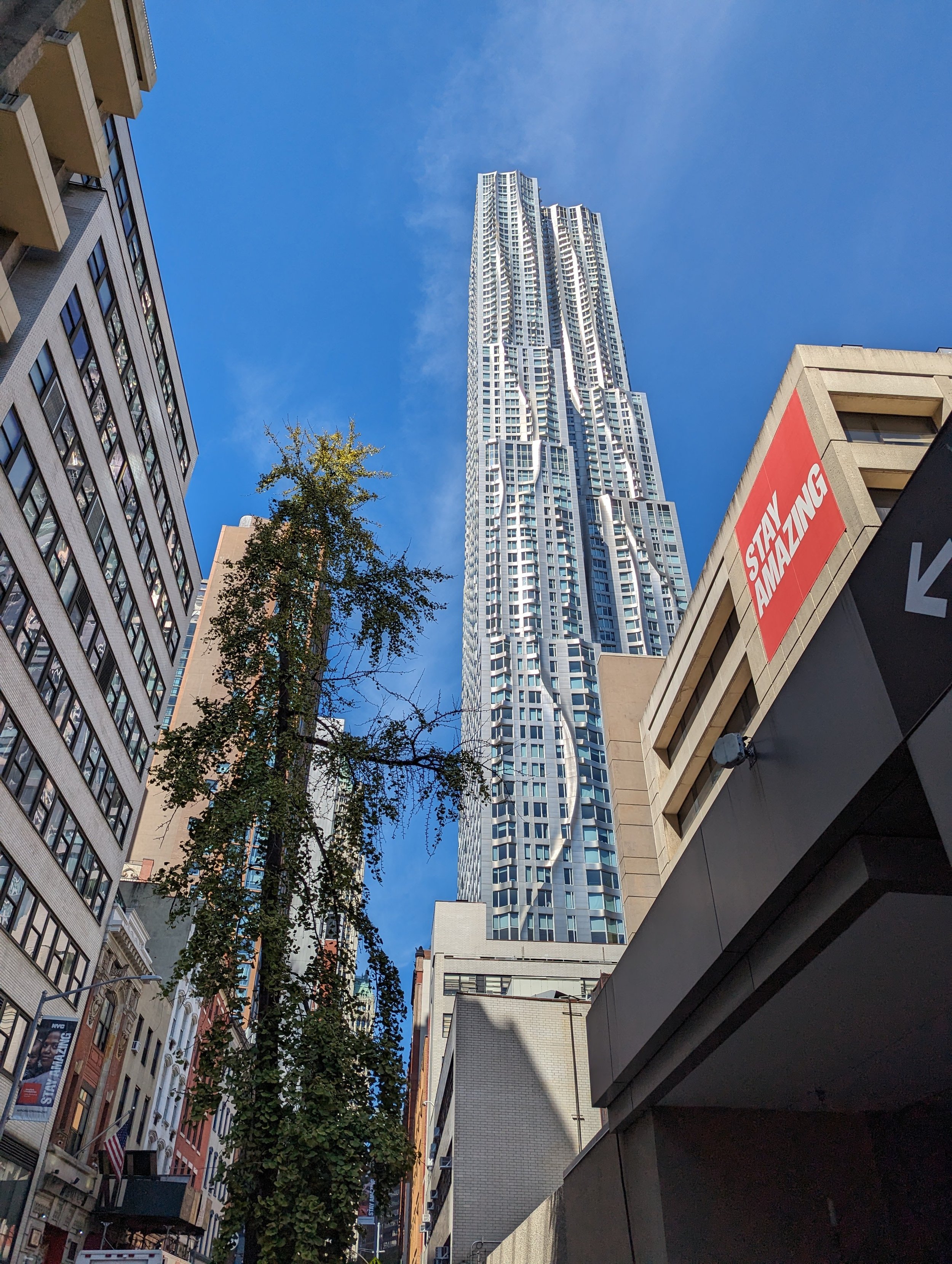
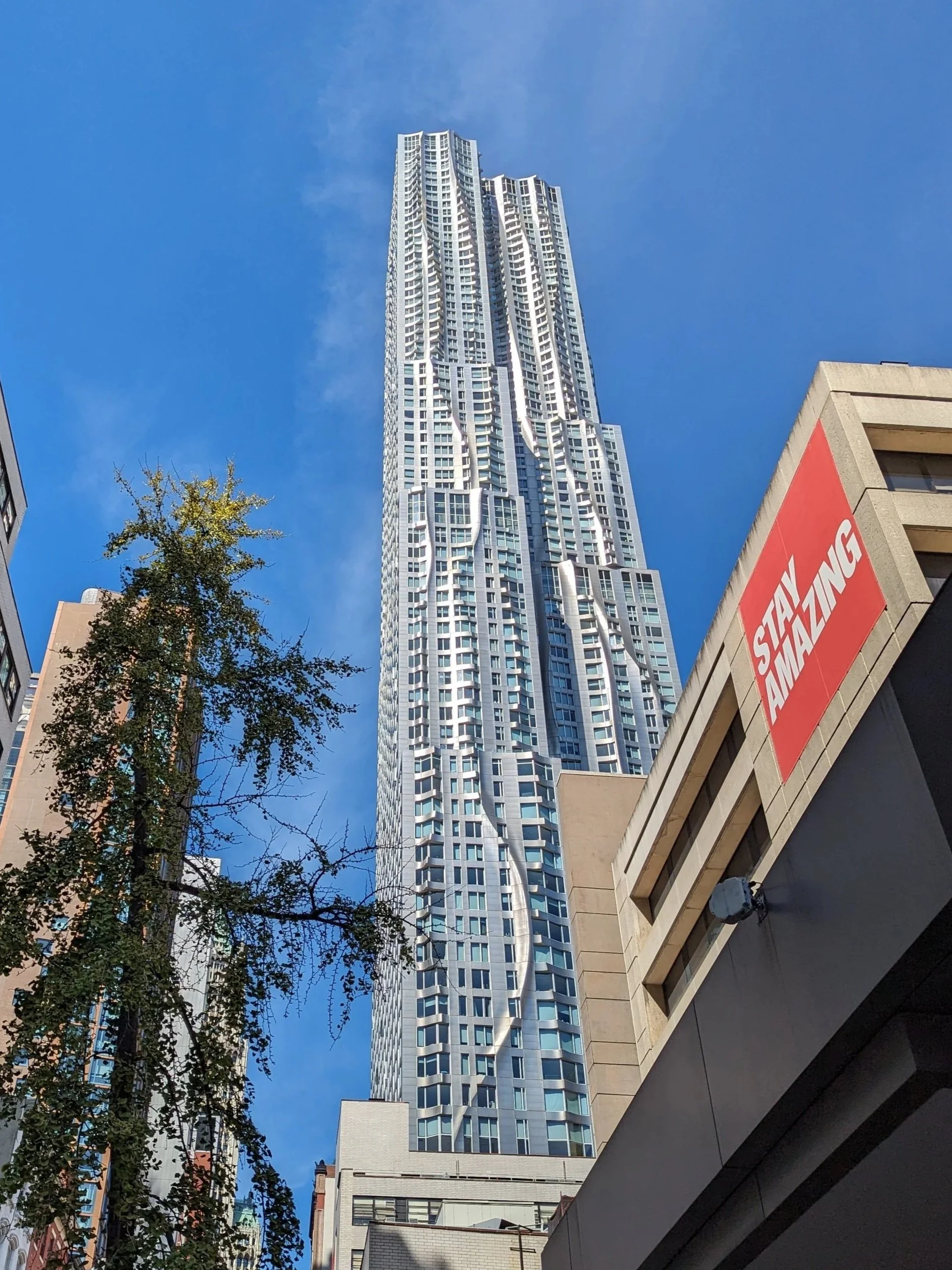
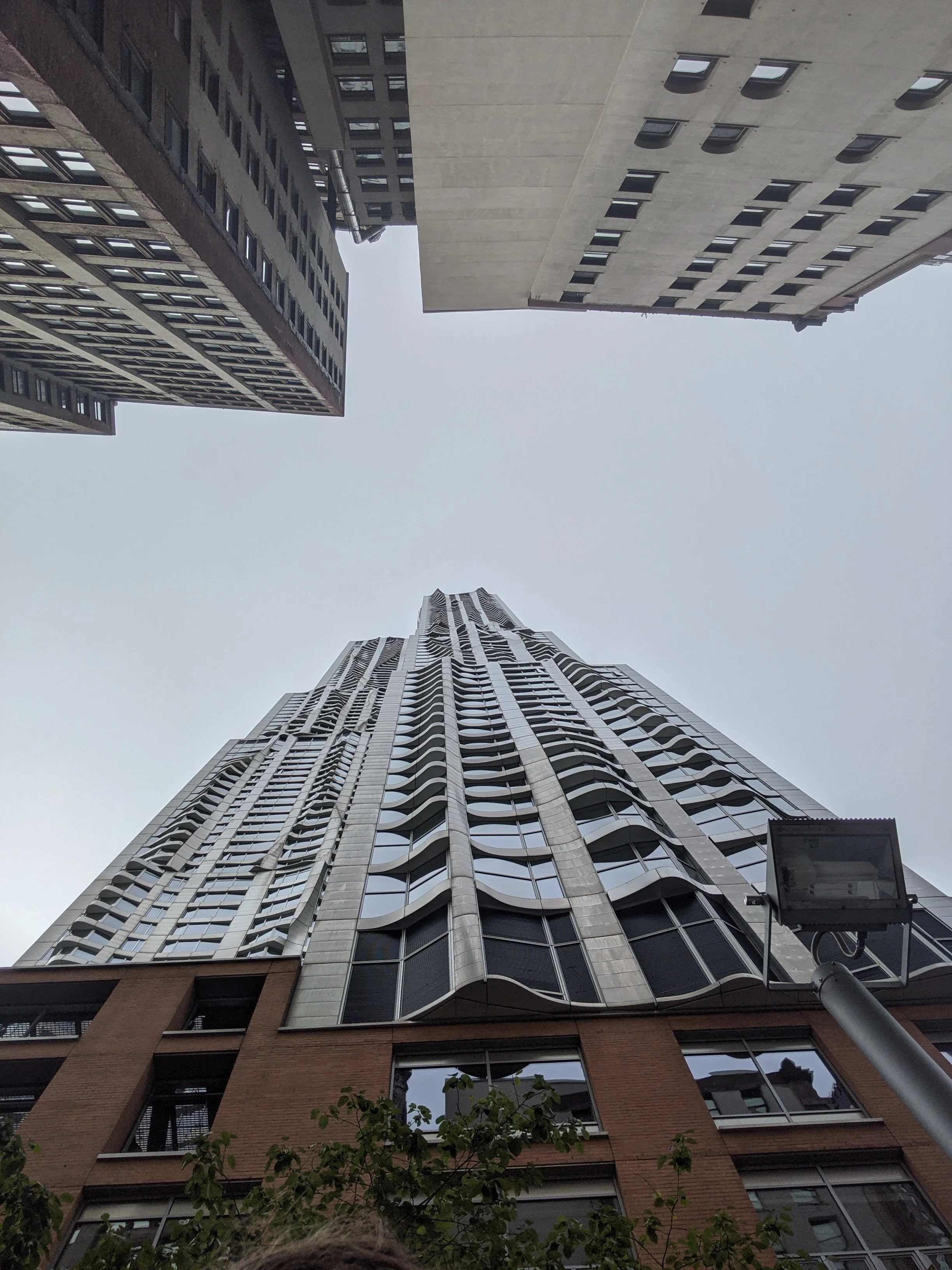
8 Spruce Street | NYC
Original Construction: 2011
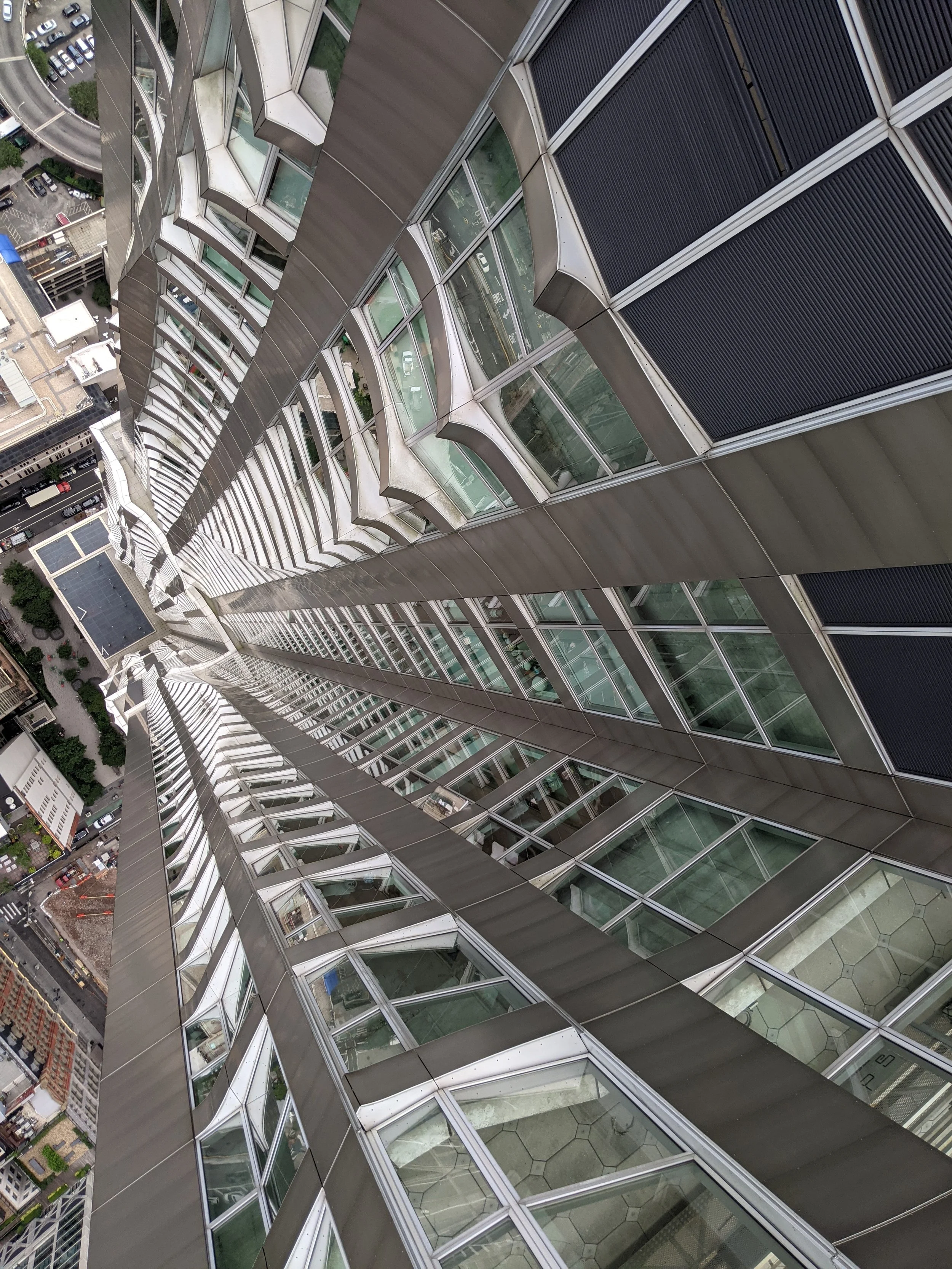
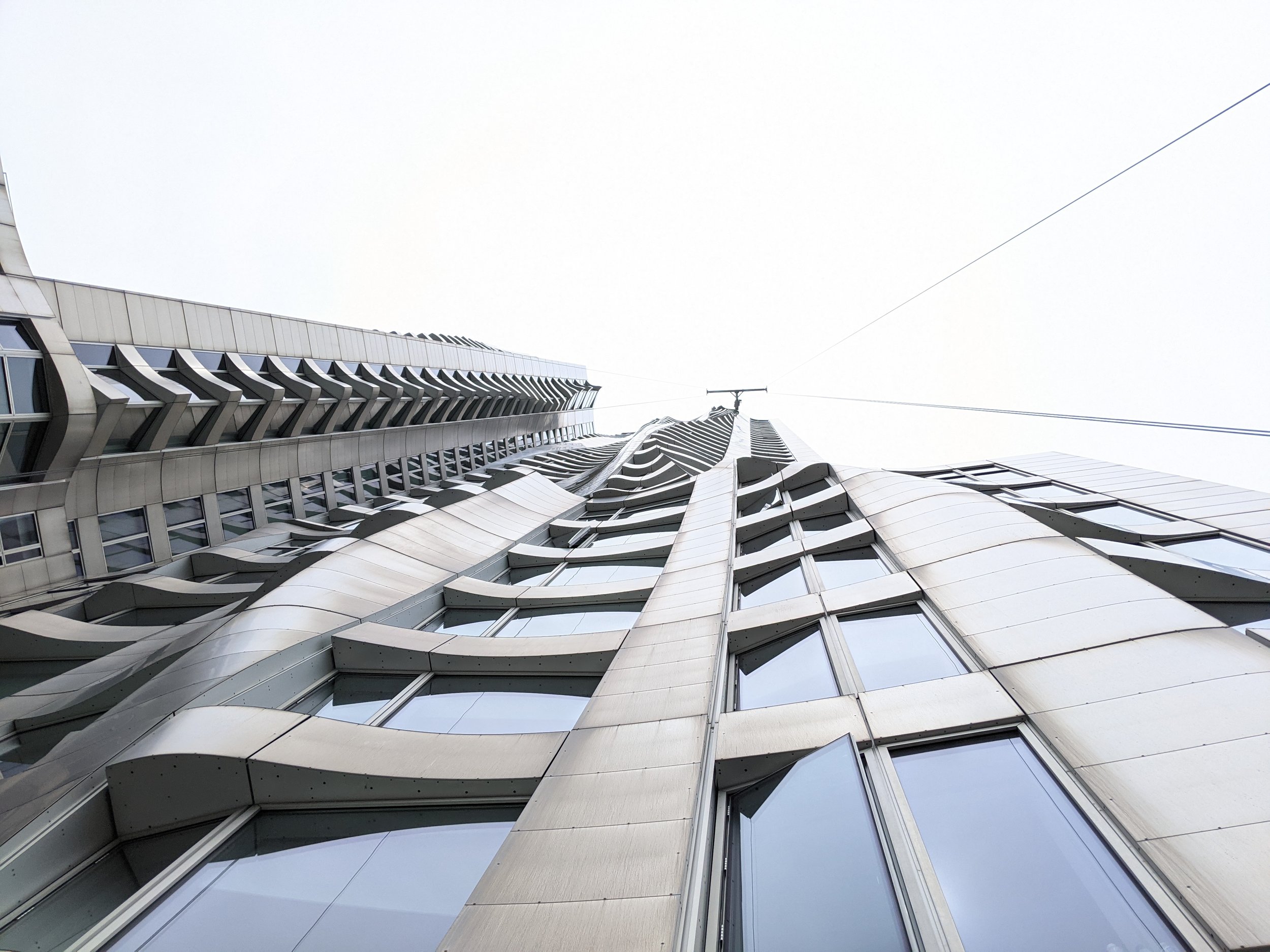
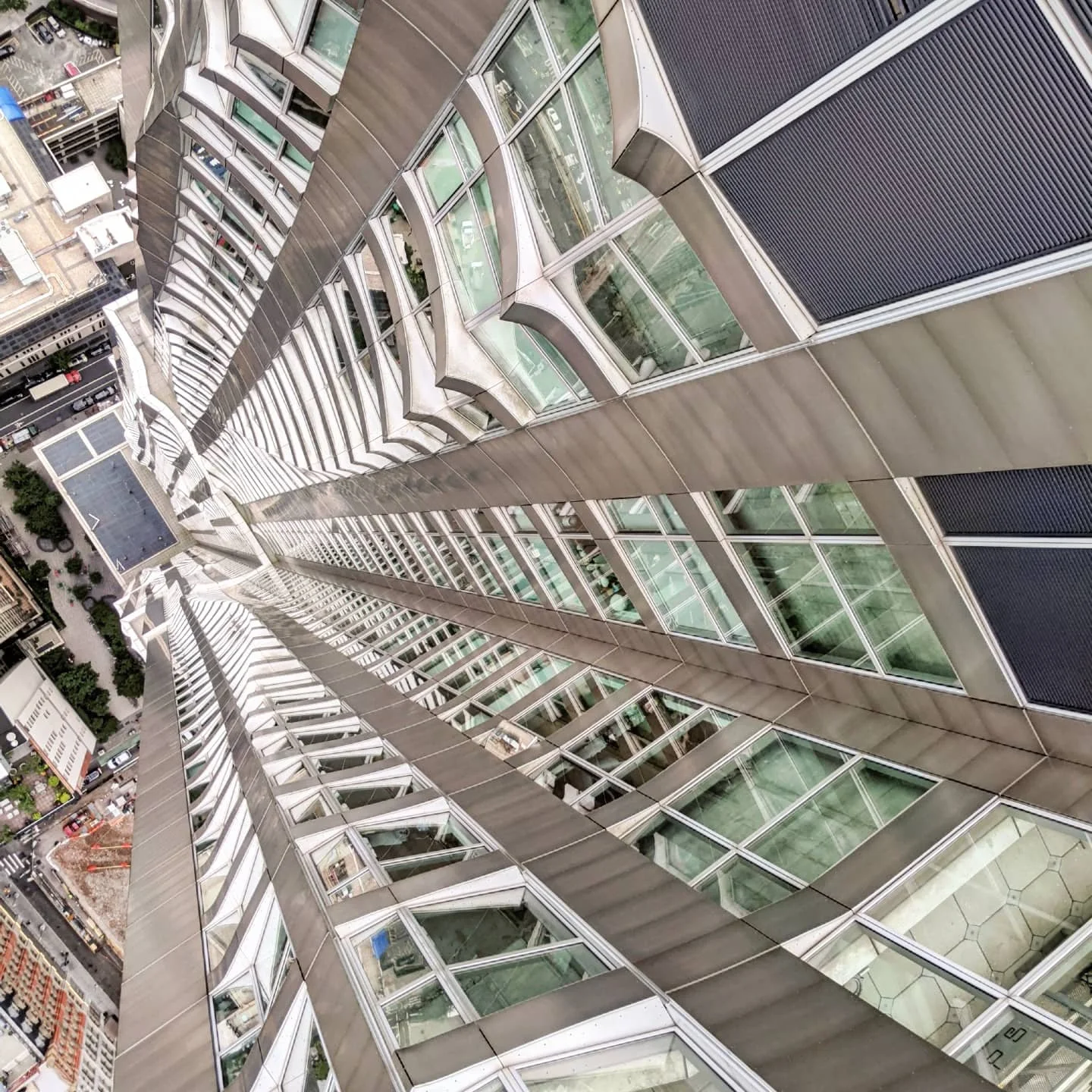
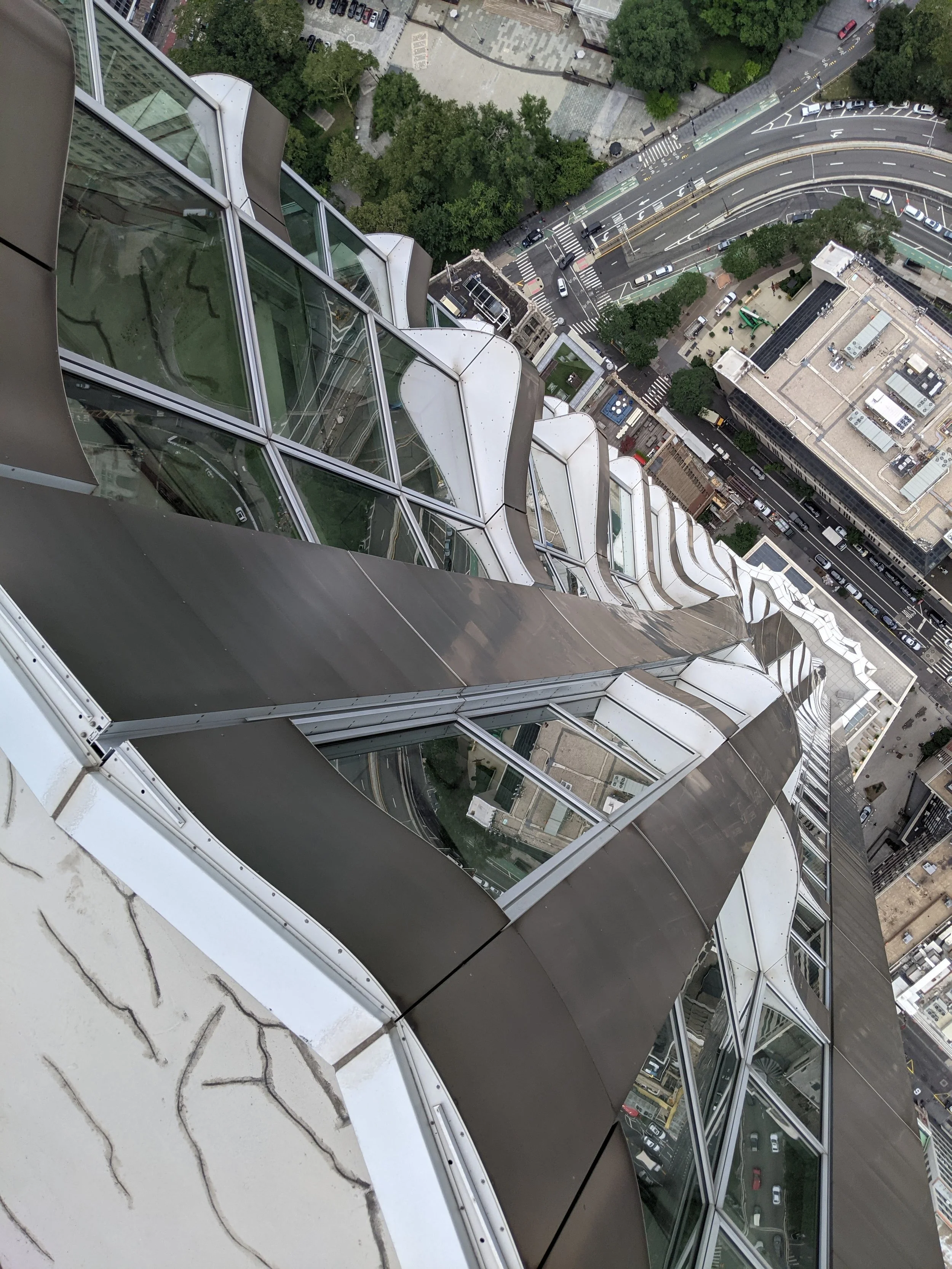
Construction Type: Reinforced concrete tower with panelized curtain wall and articulated stainless-steel rainscreen
Category: Material Science / Building Technology
Architect: Frank Gehry
Curtain Wall: Permasteelisa North America
Rainscreen: A. Zahner Company
Our Scope: Façade leak investigation and targeted remediation
A Study in Layered Enclosure, Assumptions, and Material Compatibility
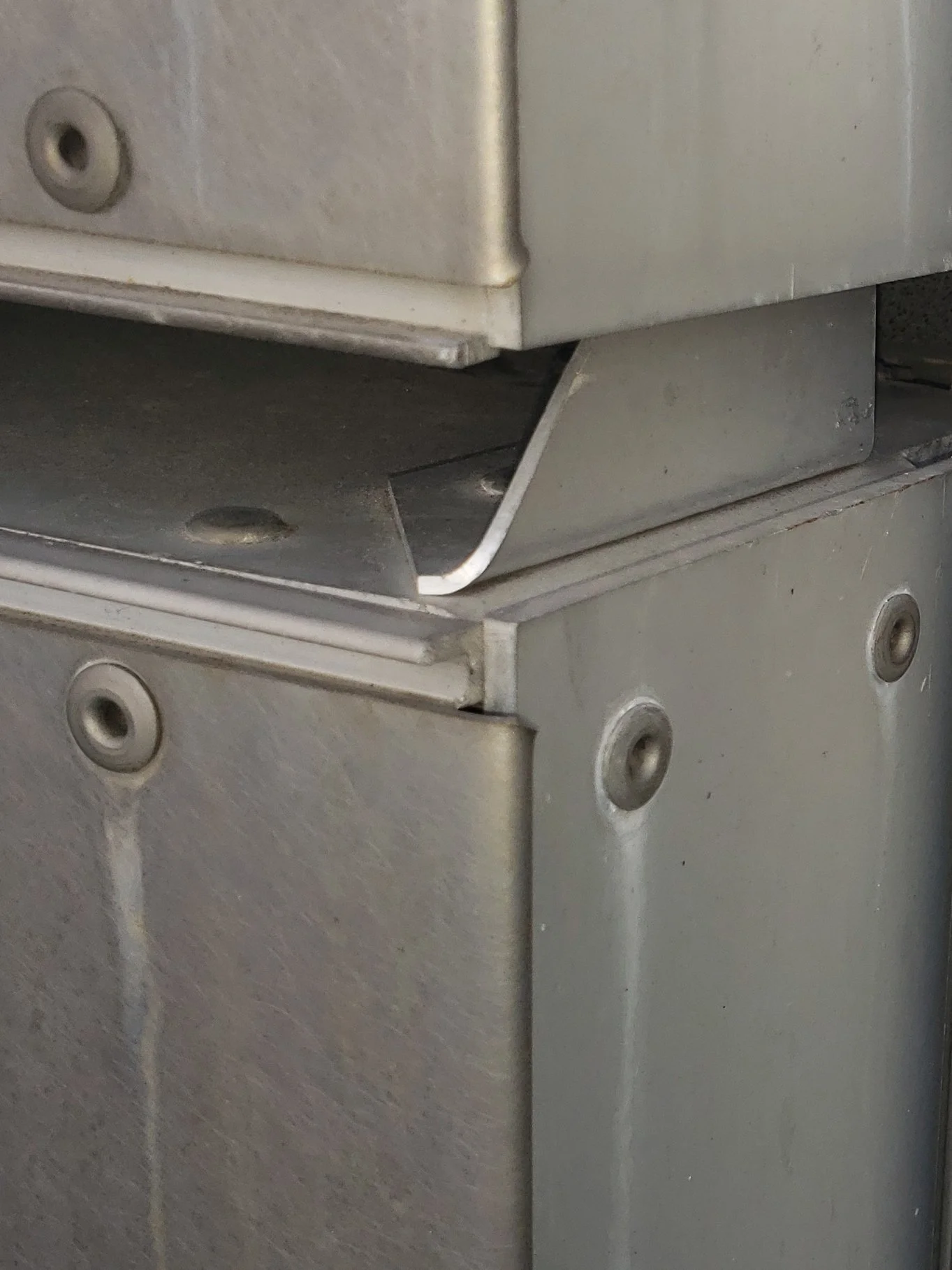
Our engagement at 8 Spruce Street began with a persistent leak occurring during wind-driven rain events. The source was ultimately traced not to the stainless-steel rainscreen, but to a hidden aluminum spandrel panel joint within the backup curtain wall system. The joint, aluminum to aluminum, was missing sealant at the time of manufacture. Accessing and repairing this condition required partial disassembly of the rainscreen, making the fix technically straightforward but operationally complex and costly. Once the joint was properly sealed, leakage at this location ceased.
What makes this building particularly instructive is what the investigation revealed about how modern façade systems rely on tightly controlled assumptions, about materials, environment, and execution, to remain stable over time.
The Leak: Simple Cause, Expensive Consequence
The failed joint was concealed behind multiple layers: the stainless-steel rainscreen, the aluminum sub girt system, and the exterior face of the curtain wall. In theory, this aluminum-to-aluminum interface should have been unremarkable. It was intended to be fully sealed, protected from direct weather exposure, and subjected only to transient moisture. In practice, a missing sealant bead during fabrication converted what should have been an episodic wetting condition into persistent moisture exposure.
The lesson here is not about sealant craftsmanship alone. In layered façades, a single defect can invalidate the environmental assumptions that underpin the entire assembly. Once moisture is allowed to linger, secondary phenomena, condensation, corrosion risk, and unintended load paths, begin to assert themselves.
Dissimilar Metals: Why It’s Mostly Fine, and How It Sometimes is Not
The second issue worth unpacking is the broader material system: stainless-steel panels mounted on aluminum sub girts and fastened with aluminum rivets, all in a coastal, high-rise urban environment.
From a material-science standpoint, aluminum and stainless steel do occupy different positions on the galvanic series. Aluminum is anodic relative to stainless steel and will preferentially corrode if a galvanic cell becomes active. That much is indisputable. What is often misunderstood is that galvanic corrosion is conditional, not automatic.
In this façade, several factors work in favor of long-term compatibility. Both aluminum and stainless-steel form stable, self-passivating oxide layers that dramatically slow electrochemical reactions. The system operates in an atmospheric, not immersed, environment, meaning moisture is typically intermittent rather than continuous. Surface-area ratios also matter: large aluminum members paired with relatively thin stainless panels reduce current density and further suppress corrosion kinetics. Under these conditions, aluminum–stainless pairings are commonly considered acceptable in curtain wall and rainscreen construction.
When Compatibility Becomes Conditional
Persistent moisture at aluminum interfaces does more than cause leaks, it creates the electrolyte continuity necessary for galvanic activity to occur. Add to that the building’s proximity to the East River, the Brooklyn Bridge, and New York Harbor, and the environmental margin tightens further. Salt-laden aerosols, elevated humidity, and slower drying cycles subtly increase surface conductivity and stress protective oxide films.
This does not mean the building is failing, nor does it suggest imminent corrosion. It does mean that execution quality becomes inseparable from material performance. In a coastal urban microclimate, details that might remain dormant elsewhere can become active participants in long-term degradation if left unchecked.