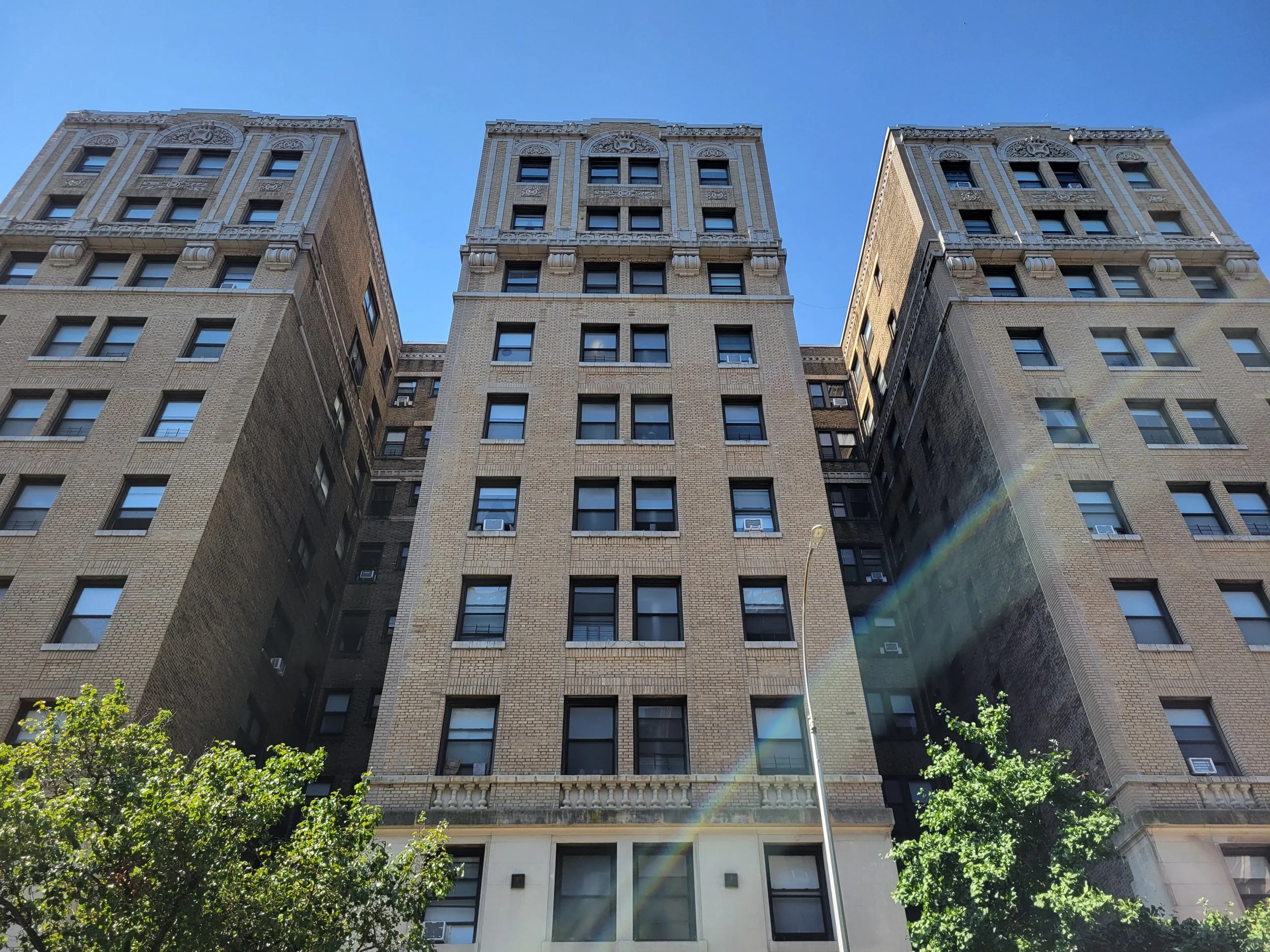
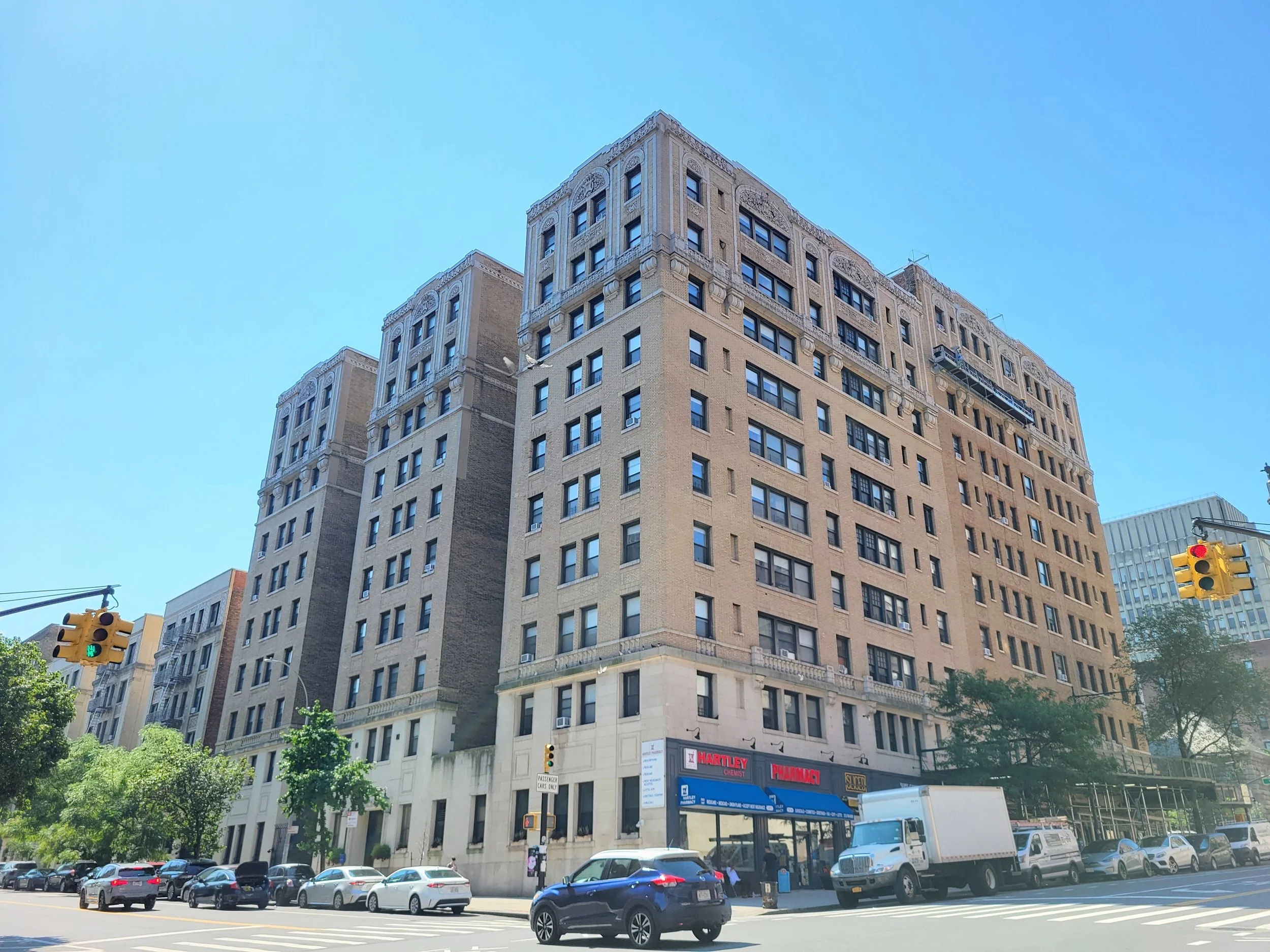
434 W 120th Street | NYC
Original Construction Date: Prewar (early 20th century)
Construction Type: Solid masonry, load-bearing exterior walls
Category: Material Science | Building Technology
Our Scope: FISP | Local Law 11 Façade Inspection and Exterior Restoration Consulting
A Study in Solid Masonry, Misapplied Expansion Joints, and the Risks of Retroactive Logic
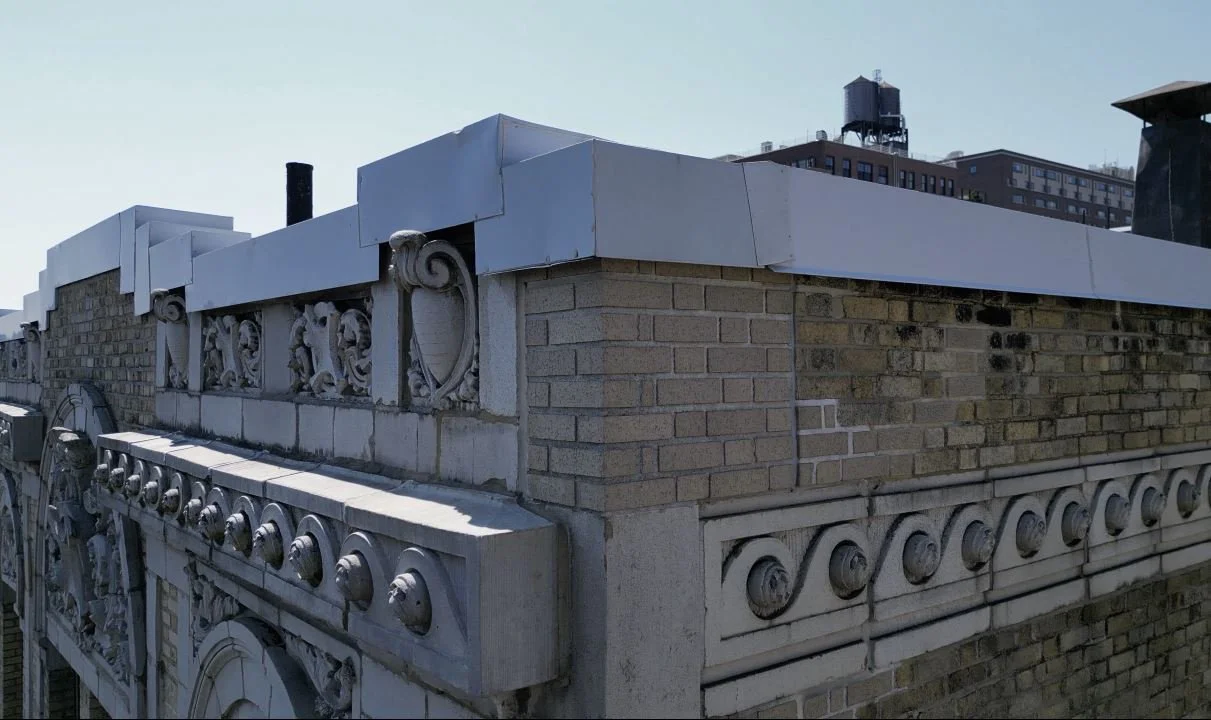
At 434 W 120th Street, our team was engaged to perform façade inspection services and prepare an exterior restoration scope as part of the FISP | Local Law 11 cycle. During that work, we observed a prior corner reconstruction project that raised immediate technical and conceptual concerns, concerns not unique to this building, but increasingly common across New York City’s prewar masonry stock.
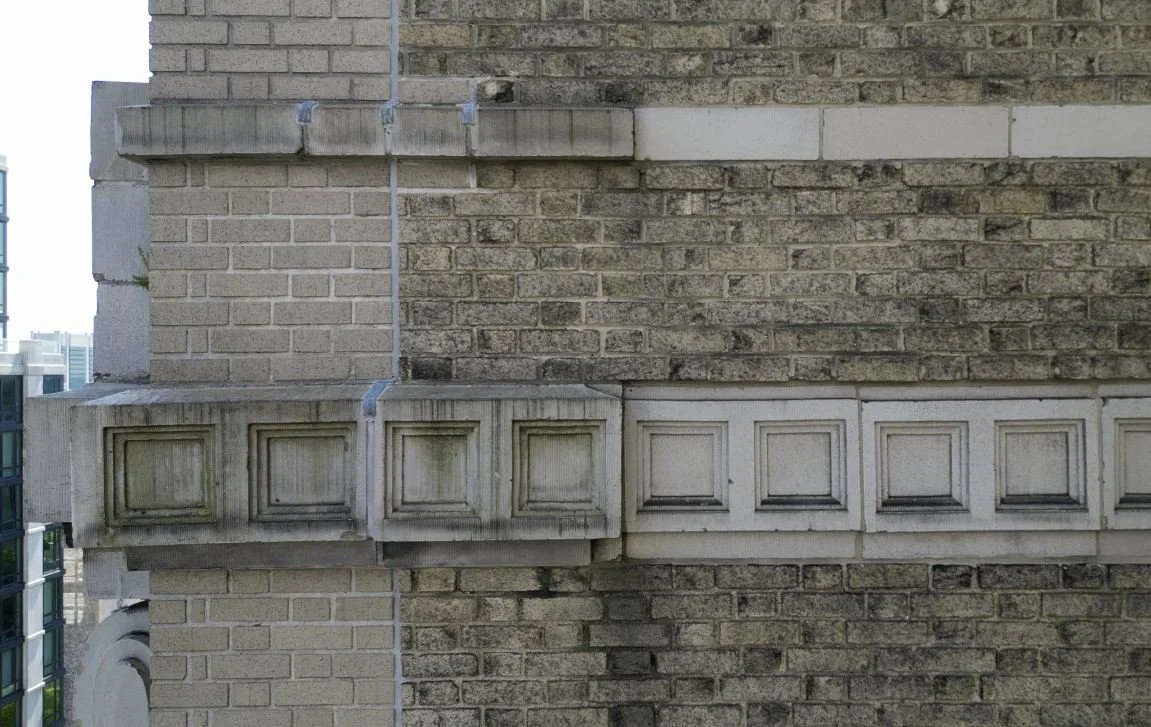
The corner in question had been fully reconstructed by a previous consultant. As part of that work, full-depth, through-wall expansion joints were installed on both sides of the corner, extending continuously through the masonry thickness. The intervention was clearly intended to address cracking and displacement that had manifested at the corner condition.
The problem was not workmanship.
The problem was diagnosis.
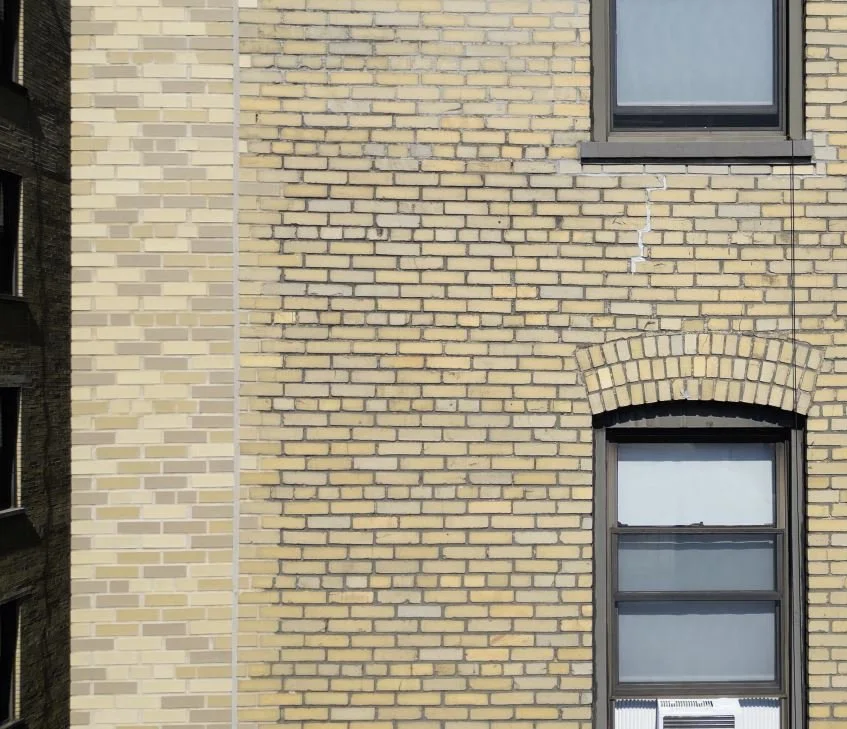
Understanding the Wall That Exists
434 W 120th Street is a prewar solid masonry building, constructed long before cavity wall theory governed exterior enclosure design in New York City. Its walls are multi-wythe, load-bearing assemblies that rely on mass, continuity, and restraint to perform. Movement in these buildings does not behave the same way it does in postwar cavity or veneer systems.
In solid masonry construction, daily and seasonal thermal movement is shallow and heavily damped by wall thickness. Temperature swings penetrate only the outer portion of the wall, and expansion is largely restrained by the mass of the assembly and by the structure it supports. Cracking in these buildings is most often driven not by thermal expansion in the abstract, but by moisture migration, corrosion of embedded steel, freeze–thaw cycling, differential settlement, or incompatible past repairs.
Previous corner reconstruction
The Expansion-Joint Reflex
What we observed at 434 W 120th Street reflects a broader pattern encountered repeatedly in recent years: the retroactive application of cavity-wall logic to solid masonry buildings.
In modern cavity and veneer systems, expansion and control joints are essential. Differential movement between materials is expected, and joints are deliberately introduced to manage that movement without distress. In those systems, expansion joints are not optional - they are the system.
In solid masonry buildings, however, cutting full-depth expansion joints introduces an entirely new behavior into a wall that was never designed to accommodate it. Rather than relieving stress benignly, these joints can disrupt established load paths, compromise the structural continuity of corners and parapets, create new avenues for water penetration, and undermine the wall’s ability to redistribute forces volumetrically.
At corners in particular, where masonry relies on interlocking geometry and continuity for stability, through-wall joints fundamentally alter how the wall carries load and resists movement.
At 434 W 120th Street, expansion joints were installed without clear evidence that thermal expansion was the governing failure mechanism, and without apparent consideration of how severing the wall at its most structurally dependent location might introduce new risks.
Cause Versus Treatment
The most troubling aspect of this type of intervention is not that it is aggressive, it is that it is presumptive. Expansion joints imply a diagnosis: that the wall is moving excessively due to thermal effects and requires relief. In many solid masonry buildings, that assumption is incorrect.
Cracked or displaced masonry at corners and parapets is far more often the result of water-driven mechanisms: saturated walls, corroding steel, freeze–thaw expansion, or long-term differential movement unrelated to daily thermal cycling. Introducing expansion joints does nothing to address these causes and may actively accelerate them by opening the wall to moisture ingress and concentrating stresses at newly created edges.
When movement, compatibility, and time are not evaluated together, the repair itself becomes a new source of failure.
Why This Matters
The corner reconstruction at 434 W 120th Street is not an isolated mistake. It is emblematic of a growing disconnect between envelope science and everyday repair practice, particularly in the context of FISP-driven work, where visible distress often invites fast, codified responses rather than careful diagnosis.
Cutting expansion joints into solid masonry walls may appear decisive, modern, and technically sophisticated. In reality, it often reflects a failure to read the system that already exists.
Solid masonry buildings do not ask to be loosened.
They ask to be understood.
Final Thoughts
434 W 120th Street serves as a cautionary example of what happens when repair strategies are imported wholesale from one construction typology into another. The issue here was not masonry cracking alone, but the assumption that all cracks speak the same language.
Effective façade repair begins not with a detail, but with a question: What kind of wall is this, and how does it actually move? When that question is skipped, even well-executed repairs can compromise the very systems they are meant to protect.
In New York City’s prewar masonry buildings, restraint is not a defect, it is the mechanism. Cutting through it without understanding why it exists risks trading visible cracks for deeper, quieter failures.